A walk through history
The beginning [300,000 years ago]
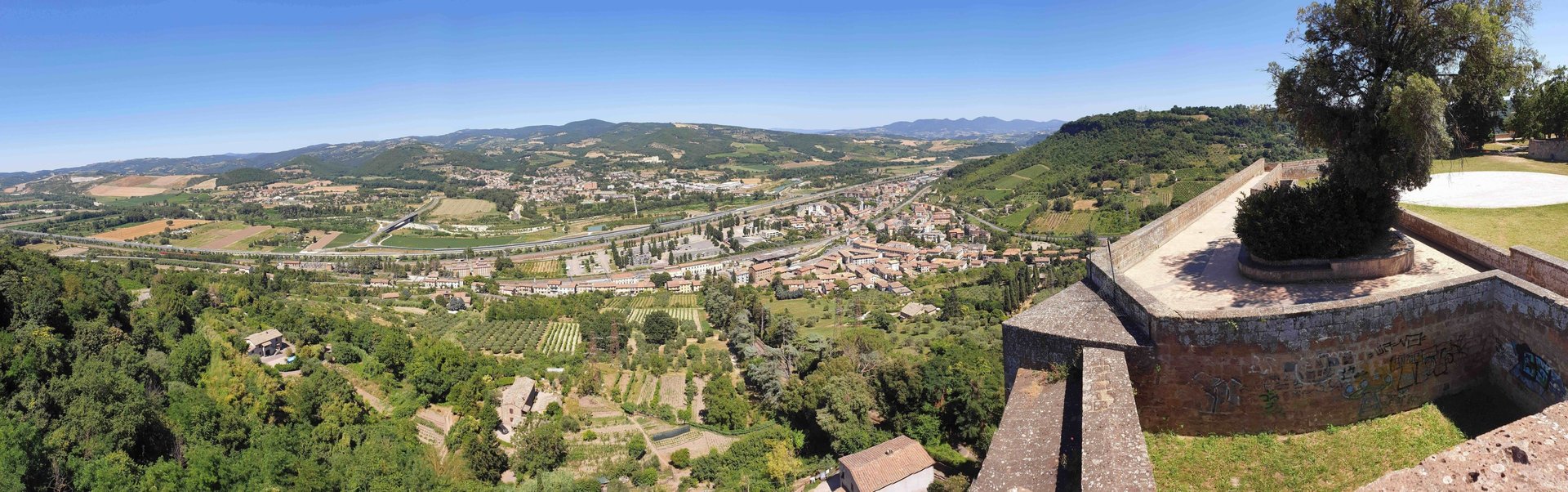
The high cliff of Orvieto is all that remains of an ancient volcanic eruption 300,000 years ago, which brought an enormous flow of magma down the valley. The particular shape of the cliff is due to erosion, also thanks to the confluence of two rivers in the immediate vicinity of the cliff itself.
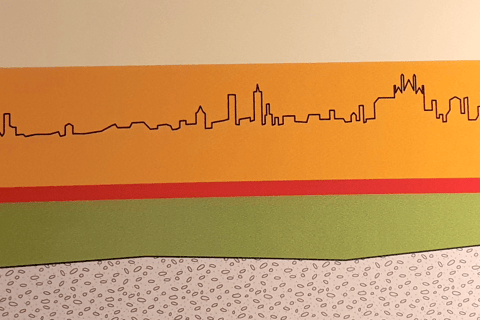
Geological layers (Orvieto, 100,000 yrs ago):
Yellow Layer: Tuff, volcanic sediments
Red Layer: Sands and conglomerates
Green Layer: Clay
Etruscan [700 BC- 254 BC]
Today, Orvieto is mainly characterized by its medieval and Renaissance buildings. However, the cliff was inhabited almost continuously for the past 2700 years - an extraordinary feat, considering that there is no water on the cliff.
From 1000 B.C., the Etruscans settled on the cliff. It was so steep that it truly was a natural fortress. Overlooking the valley and in full control of the river and trade routes below, the town developed into an important centre of commercial exchange, as well as one of the most sacred places to the Etruscans, the Fanum Voltumnae, dedicated to the highest deity Veltha.
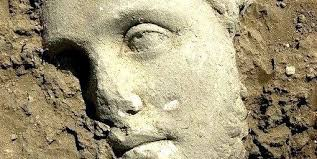
The town flourished thanks to its exquisit ceramics and bronze works, and became an important city within the loose network of Etruscan towns. Its location to the nearby "capital" city (Volsinii or today's Bolsena) allowed for a constant flow of goods and people.
The Etruscans of Velzna coexisted for a long time with the Romans, who tried many times to conquer the town, but were unable to defeat them. It was not until the local clans began to quarrel with each other that the Romans managed to finally get access to the city - and to destroy her completely.
Roman [254 BC - 596 AD]
For many years, the Romans had tried to conquer the town on the rock, but at no avail. The cliff was too steep and the network of secret underground passages too extensive. Only a stroke of luck and an inside traitor finally allowed the Romans to take possession of the city, and when they did, they where only too happy to raze it to the ground.
Only few Etruscans survived the assault. They were driven from the cliff and exiled, probably some made it to the nearby town of Velza / Volsinii, what is today Bolsena. However close, the Romans made sure that for the duration of the Roman Empire, no Etruscan was ever to return to the cliff again.
The area remained however of somewhat economical and strategic importance. Eventually, the land around the cliff became an important wine and wheat contributor to the Empire. The area between the river Tiber and the river Paglia was sufficiently raised to be safe of floods, so the Romans built a port to facilitate the rapid transport of goods to Rome.
Despite the destruction and complete annihilation of the ancient city, it is interesting to note that the complex of the Fanum Voltumnae, the most sacred place of the Etruscans as well as their ancient centre of cultural and political exchange, was spared from distruction. Indeed, it seems that the very Romans themselves actively contributed to the continuation of the religious site, as can be seen from the range of coins donated to the central temple. It was possibly dedicated to the highest God of the Etruscans, Tinia: God of the Heavens and the Etruscan equivalent of Jupiter.
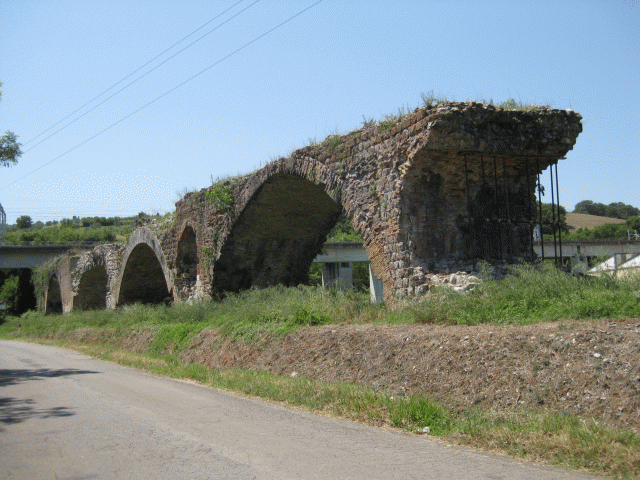
Today, only few visible signs remain - for example the ancient aqueduct below the cliff.
596 CE: The Lombards occupy the city. The Roman Empire has ceased to exist.
It's the end, but also the beginning. Orvieto takes its destiny into its own hands, and begins to re-invent itself following the ancient coordinates of the Etruscan city.
Medieval [596 AD - 1500]
1137 : Orvieto becomes City
1200 : Independent elected city goverment
1290 : Construction of Orvieto Cathedral begins
Orvieto was able to use its strategic position to control a large part of the territory downstream. This guaranteed a continuous source of money and goods, as well as an important position in regional trade. Once the Church chose Orvieto as its refuge and papal home, the city saw an accelerated economic and political development. With the economic security, the city also became an important center for the arts and culture.
Its maximum splendour was reached in the 13th century, and in fact many of the most important buildings were built in this period.
Late Medieval and Renaissance
The decline began in 1348, when an epidemic of the plague hit the city severely, drastically decimating the number of inhabitants.
Orvieto never recovered from this, and lost the relative autonomy enjoyed when it was annexed to the papacy in 1345 by Cardinal Albornoz, who also initiated the construction of the Fortress.
Some townhouses are upgraded to fit the taste, and the Cathedral enhanced with the wonderful San Brizio Chapel and additions to the facade made by Ippolito Scalza, but overall the town has lost its drive and political role in the wider area. It becomes a preferred and safe alternative to Rome to several popes, cardinals and bishops.
1860: Orvieto is annexed to the newly founded Kingdom of Italy [Note: the whole of Italy will only be unified a year later, in 1861]
During WWII, Orvieto returned once again to its important status as strategic fortress, with the 3rd division of German Panzergrenadiers taken over the city. During this time, the town's bishop had become close to the commander of the German division, since they both shared a love for the latin language and classical music, and often met one another for an evening exchange over cultural topics and a glass of Orvietan wine. It is said that when the allied forces were approaching and the risk was high that Orvieto would be bombed to the ground, the bishop paid a personal visit to the commander, begging him to leave to allow the town to be spared. The following day, the Germans negotiated an agreement with the allies that Orvieto would be spared, and the Germans would leave the city to retreat to different positions in the Volsinii mountains, which they did.
Orvieto today is a lively city, but never returned to its wealth and status enjoyed during 13th century, when it was rivaling Siena and an important ally to the rising city-state of Florence. Due to its natural limitations in space, most of its modern part today expands in the valley, where also the train station and major industries are located.
Modern [1800 - today]